The rapid growth of GLP-1 medications is doing more than changing the treatment landscape for obesity and diabetes. It is also creating new demands across the pharmaceutical supply chain.
As injectable medications such as tirzepatide and semaglutide reach more patients, an increasing number of temperature-sensitive pharmaceutical products are moving through direct-to-patient and parcel-based distribution channels.
That shift has important implications for GLP-1 cold chain shipping.
Traditional pharmaceutical distribution has often relied on relatively controlled movements between manufacturers, wholesalers, hospitals, pharmacies, and other commercial facilities. Direct-to-patient fulfillment introduces another variable: temperature-sensitive products must travel through a parcel network before reaching an individual destination.
For pharmaceutical shippers, that means thermal packaging must be designed around more than the planned transit time.
It must account for the conditions a shipment may encounter along the way.
The Growth Behind GLP-1 Shipping Demand
Few pharmaceutical categories have expanded as quickly as GLP-1 therapies.
Eli Lilly reported that 2025 revenue for Zepbound® increased 175% to approximately $13.5 billion, while Mounjaro® revenue increased 99% to approximately $23 billion. Lilly also reported that U.S. product volume increased substantially during the year, driven in large part by demand for Zepbound and Mounjaro.
Novo Nordisk reported that its obesity-care sales increased 31% at constant exchange rates in 2025. The company also reported 104% volume growth in the global branded GLP-1 obesity market.
The broader pharmaceutical market reflects the same trend. According to IQVIA’s 2026 U.S. Medicine Use Trends report, GIP/GLP-1 agonists across diabetes and obesity contributed approximately $14 billion in U.S. medicine spending growth during 2025, including approximately $9.6 billion from products approved for obesity and related conditions.
The significance for cold chain logistics is straightforward:
More GLP-1 prescriptions can mean more temperature-sensitive pharmaceutical shipments.
And increasingly, some of those shipments are going directly to patients.
Injectable GLP-1 Medications Add a Cold Chain Requirement
Not every GLP-1 medication has the same storage requirements. Oral therapies can have different handling requirements from injectable products.

However, several widely used injectable GLP-1 and related therapies require refrigerated storage before use.
For example, Zepbound® (tirzepatide) is an injectable medication, and its storage requirements include protection from freezing and appropriate temperature-controlled handling. Pharmaceutical products must always be stored and shipped according to their specific prescribing information and applicable requirements.
This distinction is important for pharmaceutical logistics teams.
The packaging specification should be based on the product’s actual temperature requirements—not simply on the fact that it belongs to the GLP-1 category.
That is where properly selected cold chain packaging becomes critical.
Direct-to-Patient Delivery Changes the Shipping Environment
One of the most important developments in GLP-1 distribution is the growth of home delivery.
NovoCare® Pharmacy currently offers home delivery for eligible GLP-1 medications including Wegovy® and Ozempic®.
LillyDirect® likewise offers home delivery for eligible Lilly medicines. Lilly states that refrigerated medicines are shipped using cold-chain materials to help maintain safe temperatures during transit. It also notes that refrigerated medicines may not ship near weekends or national holidays because of delivery considerations.
This represents an important evolution in pharmaceutical distribution.
Instead of a shipment moving primarily between controlled commercial facilities, a temperature-sensitive prescription may travel through multiple parcel-network environments before reaching the patient.
That creates additional variables:
- Transportation delays
- Missed connections
- Distribution-center handling
- Weekend or holiday interruptions
- Regional weather conditions
- Delivery attempts
- Time spent awaiting retrieval after delivery
Thermal packaging therefore has to provide an appropriate level of protection throughout the expected shipping environment.
Why 48-Hour-Plus Thermal Performance Matters
A shipment may be scheduled for next-day delivery.
That does not necessarily mean the packaging should be qualified only for the minimum expected transit time.
Parcel networks can experience unexpected delays. Weather can disrupt transportation. A shipment may spend additional time at a distribution facility or encounter conditions different from those anticipated during packaging design.
For temperature-sensitive pharmaceuticals, these variables create the need for an appropriate thermal margin.
That is why 48-hour-plus thermal performance can be an important design consideration for direct-to-patient pharmaceutical shipping.
The objective is not necessarily to keep a shipment in transit for 48 or 72 hours.
The objective is to provide thermal protection for the expected transit period while accounting for reasonable logistical variability.
Thermal duration can provide additional protection against shipping uncertainty.
What This Means for Pharmaceutical Cold Chain Packaging
As GLP-1 therapies continue to expand, pharmaceutical companies, specialty pharmacies, fulfillment providers, and distributors must consider how packaging will perform at increasing parcel volumes.
The requirements extend beyond temperature protection alone.
Packaging teams may also need to evaluate:

Can the packaging maintain the required temperature range for the intended transit duration and ambient conditions?

Does the solution provide sufficient thermal duration for the planned shipping method, including an appropriate margin for potential delays?

Can the packaging be stored efficiently before use?

Can fulfillment teams assemble shipments consistently and efficiently?

Can the packaging withstand the handling conditions associated with parcel transportation?

Can the packaging help reduce material use, storage requirements, or disposal challenges?

Can the packaging be configured around the product, carton, payload, refrigerant, and shipping requirements?
These considerations become increasingly important as pharmaceutical shipping volumes scale.
Space Efficiency Becomes More Important at Scale
High-volume pharmaceutical shipping creates another challenge that is sometimes overlooked: packaging inventory and warehouse space.
A thermal packaging system that performs well but occupies excessive warehouse space can introduce operational and logistics costs.
This is one reason compressed and collapsible packaging formats can be valuable for high-volume cold chain operations.
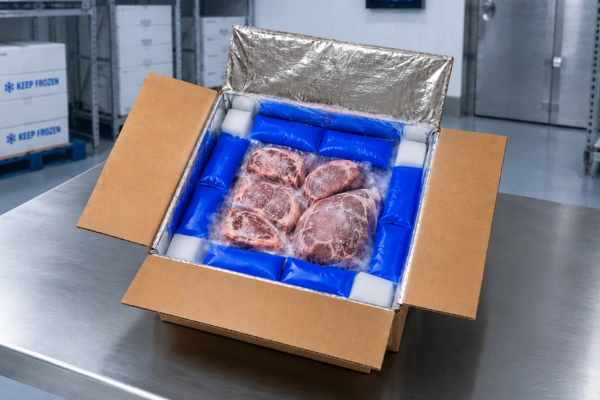
IPC’s PopupLiner™ uses vacuum-compressed technology to arrive in a compact format and expand for use. IPC states that its compressed design can reduce required storage footprint by up to 75% compared with conventional bulky alternatives.
For pharmaceutical fulfillment operations shipping large numbers of temperature-sensitive parcels, space efficiency can become an important part of the total packaging equation.
IPC’s Approach to GLP-1 Cold Chain Packaging
IPC develops temperature-sensitive packaging solutions designed around specific shipping requirements.
For pharmaceutical applications, IPC’s portfolio includes insulated box liners, pouches, mailers, and temperature-control components designed for refrigerated and extended-duration shipments.
IPC’s PopupLiner™ Box Liner is designed for refrigerated and frozen shipments and is listed with 48–72-hour protection on IPC’s product portfolio. The liner arrives vacuum compressed and is available in custom sizes.
IPC’s GLP-1 packaging solutions page specifically highlights PopupLiner for maintaining 2–8°C for up to 72 hours, along with its space-saving compressed format.
For pouch and mailer applications, IPC also offers solutions such as PopupLiner Pouch, CryoVault Pouch, and AerVault Mailers, with thermal performance depending on the specific product configuration and shipping requirements.
The key is not simply selecting a product based on a stated duration.
Thermal packaging should be selected and evaluated based on the specific payload, temperature requirement, carton or package configuration, refrigerant, transit duration, and expected ambient conditions.
The Next Challenge: Scaling the Parcel Cold Chain
The continued growth of GLP-1 therapies is creating a pharmaceutical distribution environment in which high-value, temperature-sensitive products increasingly move through parcel networks and toward individual patients.
That shift places new emphasis on:


As direct-to-patient pharmaceutical distribution continues to develop, cold chain packaging will play an increasingly important role in supporting reliable delivery.
The question is no longer simply whether a refrigerated pharmaceutical product can be shipped overnight.
The more important question is:
Can the thermal packaging provide the required temperature protection throughout the expected shipping duration—and provide an appropriate margin for the variability that can occur in real-world parcel transportation?
For pharmaceutical companies, specialty pharmacies, distributors, and fulfillment providers, that is an increasingly important consideration as GLP-1 shipping volumes grow.

Author: Charles Veiseh
Charles Veiseh is the founder and CEO of Insulated Products Corp (IPC), bringing more than 26 years of visionary leadership to the temperature control packaging industry. Since establishing IPC in 1999, Charles has driven the company’s mission to create high-performance, sustainable solutions that challenge conventional packaging methods. His deep industry experience and commitment to innovation have positioned IPC at the forefront of recyclable insulation technologies. Under his guidance, IPC has become a trusted partner for companies seeking reliable, eco-conscious alternatives in thermal protection.